
Depression Treatment in Franklin, TN
Drug-Free Mood Support With a Listening Ear
- Common In:
- Adults of any age, often during stress or life changes
- Primary Causes:
- Genetics, stress, sleep, health and life events
- Treatment Time:
- Exomind sessions of about 20-30 minutes
- Results:
- Vary by person and build over a session series


Understanding Depression and Low Mood
More Than a Bad Week
Depression and low mood can make ordinary days feel heavy. Getting out of bed takes effort, favorite activities lose their pull and small tasks start to pile up. Many people in Franklin, Brentwood, Cool Springs and Spring Hill carry this quietly for months before they ask for help, often because they are not sure whether what they feel is “bad enough” to mention.
Low mood sits on a spectrum. For some it is a stretch of flat, tired weeks after a loss or a stressful season. For others it is persistent depression that affects sleep, appetite, focus and relationships, and it often travels with anxiety and stress or trouble sleeping. Whatever it looks like for you, it deserves to be taken seriously.
If you have been searching for depression treatment near me, a licensed mental health professional or physician is the right first step for diagnosis and care. At Williamson Aesthetics & Wellness we offer something that can sit alongside that care: drug-free depression treatment with Exomind TMS in Franklin, TN, part of our mental wellness program.
What Happens in the Brain With Low Mood
Mood Is Biology, Not Weakness
01The Science
Depression is not a character flaw. Researchers describe it as a condition shaped by genetics, brain chemistry, stress hormones, sleep, physical health and life experience working together. The National Institute of Mental Health explains that depression is common, that it can affect anyone, and that most people improve with the right care.
Brain imaging studies show that mood regulation depends on networks of connected regions, including an area near the front of the brain called the dorsolateral prefrontal cortex. When activity in these networks shifts, it can become harder to feel motivation, pleasure or calm. Research on transcranial magnetic stimulation focuses on gently stimulating these networks with magnetic pulses, which is the science behind Exomind.
02How We Help
Where Exomind Fits Into Your Care
Support That Complements, Never Replaces
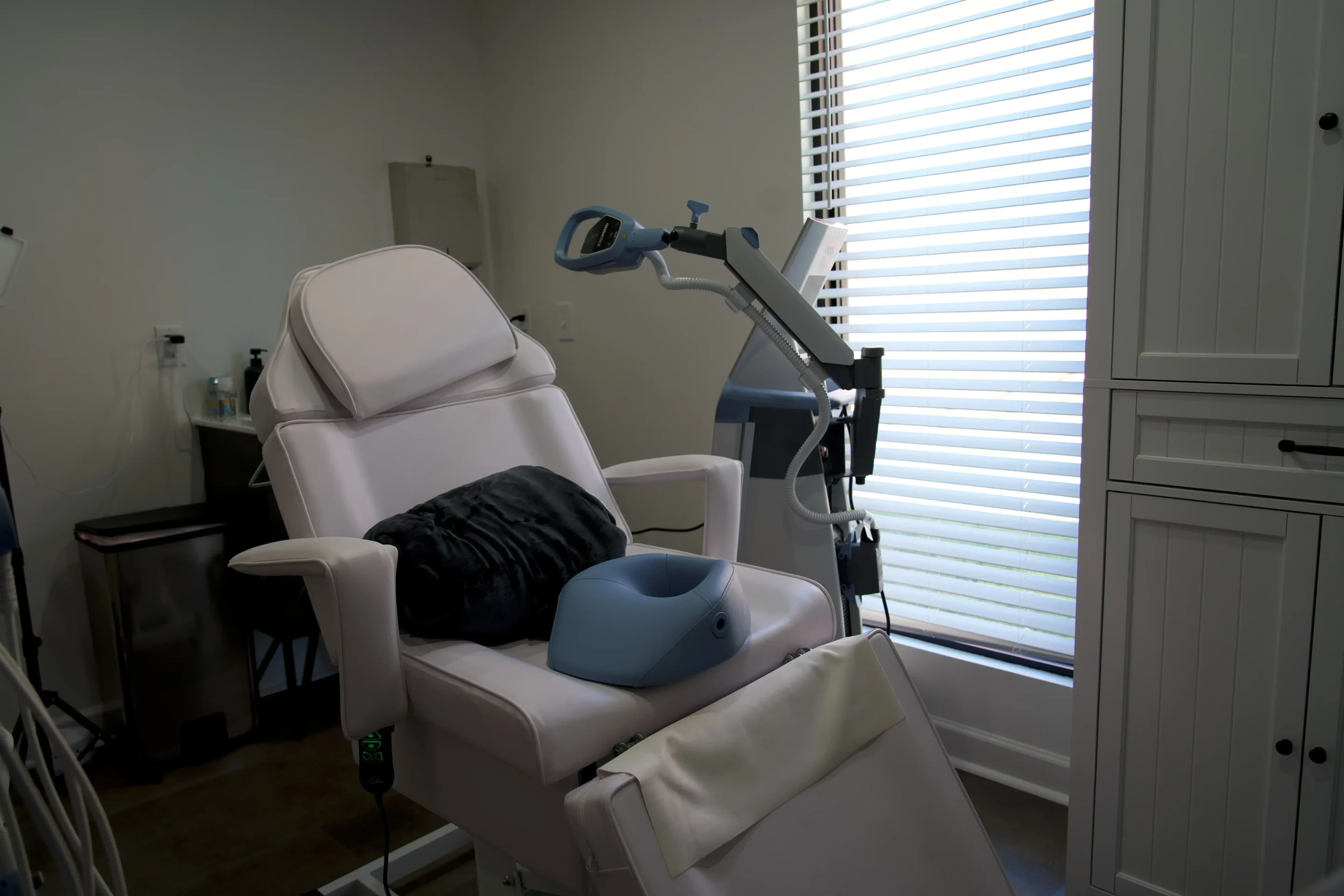
Exomind is an FDA cleared transcranial magnetic stimulation system from BTL. You stay awake and seated, there is no sedation and no medication, and each session takes about 20-30 minutes. Sessions are delivered as a series, and many clients describe the experience as a light tapping on the scalp. Learn how a session works on our TMS Therapy with Exomind page.
We see Exomind as one piece of a larger picture. It is designed to support mood and wellbeing for people who want a drug-free option to add to their routine, and it works best alongside the care you receive from your therapist, counselor or physician. Every client completes a screening before the first session, and sessions are provided with appropriate professional oversight. Many clients also report improvements in focus, though experiences differ.
Important: Exomind is FDA cleared to treat depression in adults, but it is not a substitute for diagnosis by a licensed mental health professional or physician, and results vary from person to person. Please do not stop or change any medication without talking to the prescriber who manages it. If you are in crisis or thinking about self-harm, call or text 988 to reach the 988 Suicide & Crisis Lifeline, or call 911.
What Can Contribute to Depression?
There is rarely a single cause. These are some of the factors that research links with depression and low mood, and the ones we ask about during a consultation.
- 01Chronic StressOngoing pressure at work or home keeps stress hormones elevated, which can wear down mood and energy over time.
- 02Poor SleepShort or broken sleep and low mood feed each other, so a rough stretch of nights can deepen a low season.
- 03Life EventsLoss, divorce, a move, a new baby or retirement can trigger low mood even when the change was expected.
- 04Family HistoryDepression can run in families, pointing to genetic factors that raise risk for some people.
- 05Health ConditionsThyroid changes, hormonal shifts and other medical issues are often linked with depression.
- 06Isolation and InactivityLess movement and fewer social connections are associated with a higher risk of depressive symptoms.

Why Choose Williamson Aesthetics & Wellness for Depression Care in Franklin, TN
Dr. Keith Chapman, DDS, owner of Williamson Aesthetics & Wellness and a Certified Personal Recovery Coach, leads our Exomind program. His own experience with PTSD, anxiety and depression after years of humanitarian work abroad is a large part of why he brought Exomind to Franklin. Clients tell us they value being truly heard.
- A Listening Ear
- We start by hearing your story and goals, with no rush and no judgment.
- Drug-Free Option
- Exomind uses magnetic pulses, with no medication, needles or sedation.
- Screening First
- Every client is screened before the first session to confirm it is a safe fit.
- Complements Your Care
- We encourage you to keep working with your therapist or physician.
Depression Support Options Compared
Exomind is the drug-free depression support we offer in Franklin, TN. Outside options such as talk therapy with a licensed counselor, medication managed by a prescriber, and lifestyle steps like regular exercise, sleep routines and social connection remain important, and Exomind is designed to complement them rather than replace them.
| Option | How It Works | Medication | Session Time | Best For |
|---|---|---|---|---|
| TMS Therapy with Exomind | Magnetic pulses to mood-related brain networks | None, drug-free | About 20-30 minutes | Adults seeking drug-free mood support alongside their care |
Signs You May Be Experiencing Depression
Everyone has hard days. When several of these signs last for two weeks or more, it is worth speaking with a licensed mental health professional, and you can review the common symptoms of depression from the National Institute of Mental Health. If you are looking for drug-free support to add to that care, ask us about Exomind sessions for low mood in Franklin, TN.
Persistent Sadness
Feeling sad, empty or flat most of the day, nearly every day.
Loss of Interest
Hobbies, friends or activities you once enjoyed no longer feel rewarding.
Sleep Changes
Trouble falling or staying asleep, or sleeping far more than usual.
Low Energy
Feeling drained or slowed down, even after rest.
Appetite Shifts
Eating much more or much less than usual, sometimes with weight changes.
Hard to Concentrate
Struggling to focus, make decisions or remember everyday details.
Explore More Related Treatments
TMS Therapy with Exomind
Drug-free, non-invasive wellness sessions that support mood, stress relief, sleep and appetite regulation, delivered with a listening ear.
- Drug-Free Sessions
- Non-Invasive
- Awake and at Ease
Explore More Related Treatments
Emface
Emface tones the muscles that hold your face up and renews collagen in the skin above them, all in about 20 minutes with no needles and no downtime.
- No Needles
- Two Layers at Once
- Natural Expression
Explore More Related Treatments
Exion Face
Radiofrequency and targeted ultrasound work together to firm, hydrate and tighten skin, with no needles and no downtime.
- No Needles
- Zero Downtime
- Hyaluronic Acid Boost
Frequently Asked Questions
Is Exomind a treatment for depression?
Do I have to stop my antidepressant to try Exomind?
What does an Exomind session feel like?
How many sessions will I need?
Who should not use Exomind?
What should I do if I am in crisis?
How much does Exomind cost in Franklin, TN?
Visit Us
Schedule Today Your Depression & Low Mood Consultation
Scientific References
- Trapp et al., Clin Neurophysiol. (2025). Consensus review and considerations on TMS to treat depression: A comprehensive update endorsed by the National Network of Depression Centers, the Clinical TMS Society, and the International Federation of Clinical Neurophysiology. PMID: 39756350.
- Pánek et al., Front Psychiatry. (2026). Innovations in repetitive transcranial magnetic stimulation: a review of clinical evidence and patient-reported outcomes for ExoTMS. PMID: 42548871.
- Rossi et al., Clin Neurophysiol. (2021). Safety and recommendations for TMS use in healthy subjects and patient populations, with updates on training, ethical and regulatory issues: Expert Guidelines. PMID: 33243615.
- Sabé et al., JAMA Netw Open. (2024). Transcranial Magnetic Stimulation and Transcranial Direct Current Stimulation Across Mental Disorders: A Systematic Review and Dose-Response Meta-Analysis. PMID: 38776083.
- Lee et al., Psychol Med. (2019). The risk of developing major depression among individuals with subthreshold depression: a systematic review and meta-analysis of longitudinal cohort studies. PMID: 29530112.
- Heissel et al., Br J Sports Med. (2023). Exercise as medicine for depressive symptoms? A systematic review and meta-analysis with meta-regression. PMID: 36731907.