
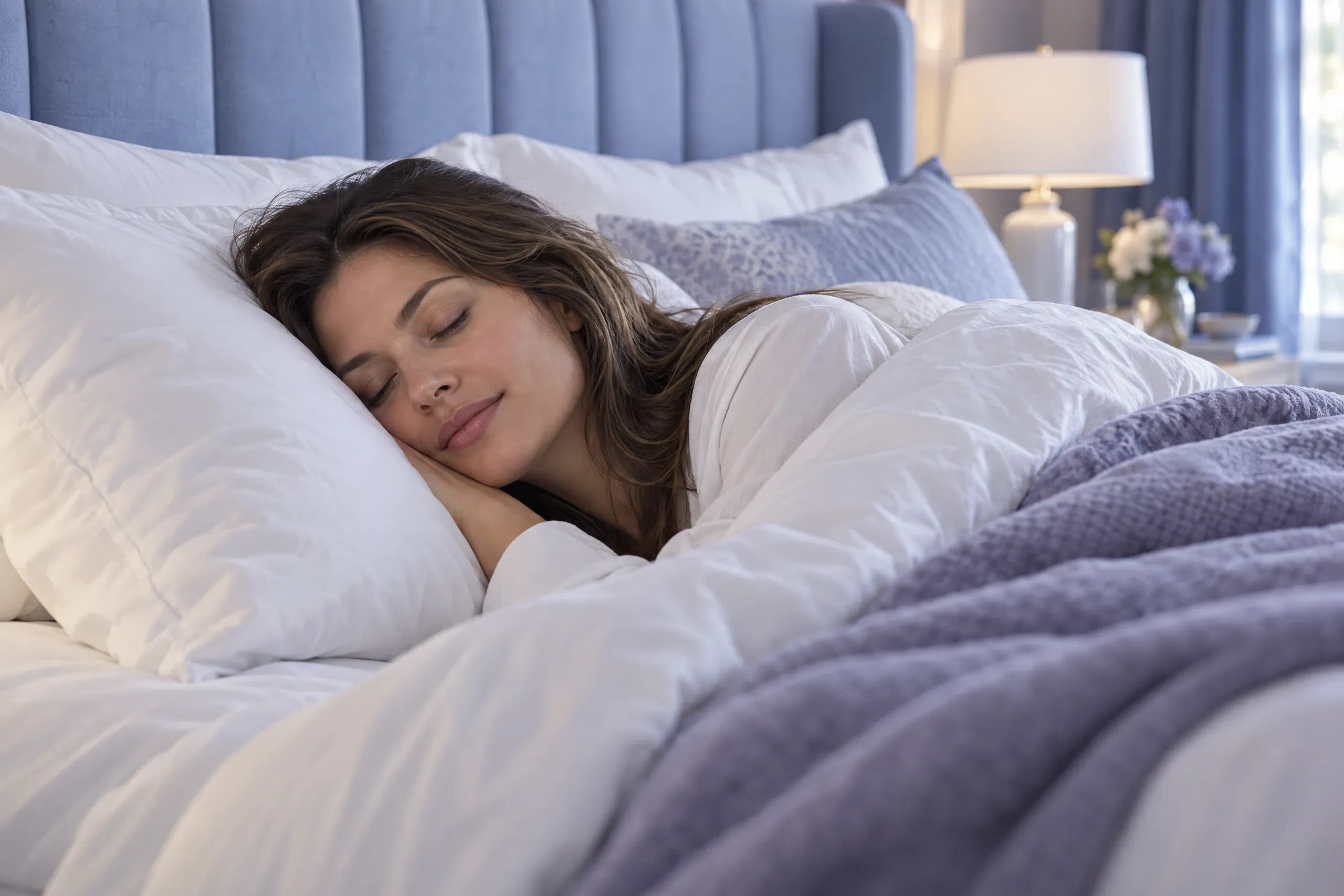
How to Fall Asleep Faster Without Medication
Struggling to drift off? Learn how to fall asleep faster without medication using light, a wind-down routine and a steady schedule, plus drug-free options like Exomind wellness sessions in Franklin, TN when trouble sleeping lingers.
The fastest way to fall asleep without medication is to give your brain clear, consistent signals that the day is over: wake up at the same time every morning, get bright light early, dim the lights and put the phone away for the last hour of the evening, and only go to bed when you feel sleepy. Most people will not see a change overnight, but these habits tend to shorten the time it takes to drift off within a couple of weeks. If you still have trouble sleeping after that, it may be time to look at what is keeping your mind switched on.
Here in Franklin, TN, we hear the same story from clients again and again. Days are full, and by the time the house is quiet the mind refuses to slow down. This guide covers why falling asleep gets hard, the habits that help, what to avoid, and drug-free options for when restless nights stop being occasional.
Why Falling Asleep Gets Harder
Two systems work together: a body clock that sets the timing of sleepiness, and a sleep drive that builds the longer you are awake. When both line up at bedtime, you fall asleep easily. When something pushes them out of step, you lie awake staring at the ceiling.
Stress and Racing Thoughts
Stress keeps the brain in an alert, problem-solving mode. Work deadlines, money worries or a hard conversation replayed at 11 p.m. all keep stress hormones elevated at exactly the moment they should be falling. Sleep trouble and mood often travel together, which is why many people who struggle at night also relate to everyday anxiety and stress.
Screens and Evening Light
Light is the strongest cue your body clock uses. Bright light in the evening, especially from phones, tablets and laptops held close to the face, tells the brain it is still daytime. In a well-known study published in PNAS, adults who read on a light-emitting e-reader before bed took longer to fall asleep, felt less sleepy in the evening and were less alert the next morning than when they read a printed book.
An Irregular Routine
Sleeping in on weekends, late nights followed by early alarms, travel and shift work all confuse the body clock. When your wake time moves around, your brain never gets a steady signal for when sleepiness should arrive.
Habits That Help You Fall Asleep Faster
These are the building blocks sleep specialists call sleep hygiene and stimulus control. A review of research on sleep and insomnia found that sleep hygiene education on its own offers modest help, and that it works best as part of a broader plan. Think of the habits below as the foundation, not the whole house.
Use Light on Purpose
- Get outside or near a bright window within an hour of waking, even on cloudy Tennessee mornings.
- Keep days bright and evenings dim. Switch to lamps and warmer bulbs after dinner.
- Make the bedroom dark, quiet and cool. Blackout curtains or an eye mask help if streetlights or early sunrise wake you.
Build a Wind-Down Routine
Give yourself 30 to 60 minutes between the busy part of the evening and lights out. Keep it simple and repeatable: a warm shower, stretching, a paper book, soft music or slow breathing.
Keep Your Schedule Consistent
- Pick a wake time and keep it seven days a week, including weekends. A steady wake time does more for sleep timing than a fixed bedtime.
- Go to bed when you feel sleepy, not just because the clock says so.
- If you are still awake after what feels like 20 minutes, get up, go to another dim room and do something calm until you feel drowsy, then return to bed.
- Keep the bed for sleep and intimacy only, so your brain links it with rest rather than scrolling, working or worrying.
What to Avoid Before Bed
- Late caffeine. Caffeine lingers in the body for hours. A 2023 review in Sleep Medicine Reviews found that caffeine reduced total sleep time and sleep efficiency, so move coffee, energy drinks and strong tea to the morning.
- Alcohol as a sleep aid. A nightcap may make you drowsy, but alcohol tends to break up sleep later in the night and leave you less rested.
- Phones in bed. Beyond the light, social media, news and email keep your mind engaged. Charge your phone outside the bedroom if you can.
- Clock watching. Checking the time and calculating how many hours are left raises stress. Turn the clock away.
Natural Remedies for Insomnia Worth Knowing
When people search for natural remedies for insomnia, they usually mean anything that does not involve a sleeping pill. The option with the strongest research behind it is cognitive behavioral therapy for insomnia (CBT-I), a structured program delivered by a trained clinician or through guided digital programs. An American Academy of Sleep Medicine systematic review found that CBT-I and related behavioral treatments improve chronic insomnia in adults. Relaxation training, mindfulness and regular daytime exercise can also help.
Supplements such as melatonin or magnesium are popular, but they are not right for everyone and can interact with other medicines. Please talk with your doctor or pharmacist before starting one, and do not stop or change any prescribed sleep, mood or anxiety medication without first speaking to the professional who prescribed it.
When Insomnia Lingers: Drug-Free Options and Exomind
For some people, good habits are not enough, especially when stress, worry or low mood are part of the picture. That is one reason we offer TMS therapy with Exomind in Franklin, TN as part of our mental wellness at Williamson Aesthetics & Wellness.
Exomind by BTL is an FDA cleared transcranial magnetic stimulation (TMS) system. Gentle magnetic pulses are delivered through an applicator placed near the scalp to stimulate areas of the brain involved in mood and stress regulation. You stay awake and seated, there is no medication and no sedation, and each session takes about 20-30 minutes as part of a series. Many clients describe feeling calmer in the evenings as their sessions add up, though results vary from person to person.
Research on transcranial magnetic stimulation for insomnia, including a 2021 systematic review and meta-analysis in Sleep Medicine, has reported improvements in sleep quality compared with sham stimulation. That research looks at clinical rTMS in general, not Exomind specifically. We offer Exomind as drug-free support for sleep that complements, and never replaces, proven care such as CBT-I and guidance from your doctor.
My own experience with PTSD, anxiety and depression after years of work abroad is a big part of why I wanted to bring Exomind to Franklin. Every client is screened before the first session, including a review of health history, seizure risk and any metal in or near the head, and sessions run with appropriate professional oversight. Exomind is not suitable for everyone, including people with pacemakers, implanted defibrillators or neurostimulators, a history of seizures or epilepsy, or those who are pregnant. You can read more about how we approach insomnia treatment in Franklin, TN or learn about Dr. Keith Chapman, DDS.
Important: Exomind is FDA cleared for depression; its use for sleep is supportive. It is not a substitute for diagnosis by a licensed physician or mental health professional. If you are in crisis or having thoughts of self-harm, call or text 988 to reach the 988 Suicide & Crisis Lifeline, or call 911.
When to Talk to a Professional
An occasional rough night is normal. Please see your doctor if any of the following apply:
- Trouble falling or staying asleep at least three nights a week for more than a few weeks.
- Daytime exhaustion that affects work, driving, mood or relationships.
- Loud snoring, pauses in breathing, gasping or choking during sleep, or waking unrefreshed after a full night in bed. These can be signs of sleep apnea, which needs a medical evaluation.
- Persistent low mood, anxiety or thoughts of self-harm alongside poor sleep.
The clinical overview of insomnia from the National Heart, Lung, and Blood Institute and the American Academy of Sleep Medicine guide to insomnia are reliable places to read more before your appointment.
Frequently Asked Questions
How can I fall asleep faster?
Keep a consistent wake time, get bright light in the morning, and dim lights and screens for the last hour before bed. Go to bed only when sleepy, and if you are awake for what feels like 20 minutes, get up and do something calm until drowsy. Cutting afternoon caffeine and building a short wind-down routine also help most people within a few weeks.
Why can’t I fall asleep?
The most common reasons are stress and racing thoughts, bright screens late in the evening, an irregular schedule, and caffeine or alcohol too close to bedtime. Health issues such as pain, sleep apnea, hormone changes, low mood or certain medicines can also play a role. If trouble sleeping continues for weeks, talk with your doctor to rule out a medical cause.
What are natural remedies for insomnia?
Drug-free approaches include consistent sleep and wake times, morning light, a relaxing bedtime routine, regular exercise, relaxation or mindfulness practice, and cognitive behavioral therapy for insomnia (CBT-I), which has the strongest research support. Supplements such as melatonin or magnesium are not right for everyone, so check with your doctor or pharmacist before trying one, especially if you take other medicines.
Does screen time affect sleep?
Yes, for many people. Bright light from phones and tablets in the evening can delay the body’s natural signals for sleep, and engaging content keeps the mind active. Research on light-emitting e-readers found people took longer to fall asleep and felt less alert the next morning. Try putting devices away an hour before bed and charging them outside the bedroom.
How does TMS support sleep?
TMS uses gentle magnetic pulses to stimulate brain areas involved in mood and stress regulation. Exomind is a drug-free TMS system, and many clients report calmer evenings over a session series, though results vary. Research on clinical rTMS for insomnia is encouraging, but Exomind is not a substitute for care from a licensed physician or mental health professional.
When should I seek help for insomnia?
See your doctor if trouble sleeping happens at least three nights a week for more than a few weeks, affects your daytime life, or comes with loud snoring, gasping or pauses in breathing, which can signal sleep apnea. If poor sleep comes with thoughts of self-harm, call or text 988 or call 911 right away.
Book a Wellness Consultation in Franklin, TN
If restless nights have become a pattern, we would be glad to listen. At a consultation we talk through your sleep, your stressors and your goals, screen you for safety, and explain honestly whether Exomind sessions could fit alongside the care you already have. Pricing is personalized and quoted at your visit. Call (615) 628-7419 or reach us through our contact page. Williamson Aesthetics & Wellness is at 1111 Battlewood St, Ste 3, Franklin, TN 37069, serving Franklin, Brentwood, Cool Springs, Spring Hill and the greater Nashville area.
This article is general wellness information written by Dr. Keith Chapman, DDS, owner of Williamson Aesthetics & Wellness. It is not medical advice, a diagnosis or a substitute for care from a licensed physician or mental health professional. Exomind is FDA cleared for depression; its use for sleep is supportive, and individual results vary.
References
- Chung et al., Fam Pract. (2018). Sleep hygiene education as a treatment of insomnia: a systematic review and meta-analysis. PMID: 29194467.
- Chang et al., Proc Natl Acad Sci U S A. (2015). Evening use of light-emitting eReaders negatively affects sleep, circadian timing, and next-morning alertness. PMID: 25535358.
- Gardiner et al., Sleep Med Rev. (2023). The effect of caffeine on subsequent sleep: A systematic review and meta-analysis. PMID: 36870101.
- Edinger et al., J Clin Sleep Med. (2021). Behavioral and psychological treatments for chronic insomnia disorder in adults: an American Academy of Sleep Medicine systematic review, meta-analysis, and GRADE assessment. PMID: 33164741.
- Sun et al., Sleep Med. (2021). The effect of repetitive transcranial magnetic stimulation for insomnia: a systematic review and meta-analysis. PMID: 32830052.